Have any question?
Text or Call (954) 573-1300

Text or Call (954) 573-1300


If you think back to how your office operated two decades ago, it’s a miracle anything actually got done. We relied on filing cabinets that weighed as much as a Buick, and our email servers would crash if someone tried to send an attachment larger than a postage stamp.
Since then, technology has turned business completely upside down. A few key tools fundamentally shifted how we work, communicate, and manage our teams. Let's look at the four biggest disruptions in chronological order, and more importantly, how you can ensure they are actually generating a return on investment for your company.

It is incredibly difficult to miss the massive spike in technology criminality lately. Every other week, there is a new headline about a massive data breach or a municipality being held hostage by hackers.
Here is the truth of the matter: people aren’t afraid of cyberattacks; they’re afraid of the consequences. For most people, the idea of a cyberthreat is still pretty nebulous. Your biggest concern isn’t the attack itself. It’s the impact. You don’t want the fines, you don’t want to lose business, and you certainly don't want to be stolen from.

You thought you were doing a good thing. Handing out subsidized fitness trackers, offering a mental health app, setting up digital biometric screenings—it all looks great on a recruiting brochure or an onboarding platform. You assume that because it’s "health data," HIPAA has it locked down and your hands are clean.
I hate to be the bearer of bad news, but that assumption is putting your business in serious jeopardy.

Every few months, an executive reads a breathless article about artificial intelligence and gets the sudden urge to automate half their payroll out of existence. The fantasy is always the same: replace administrative staff with clever scripts, sit back, and watch profit margins double while software runs the company from a cloud dashboard.
In practice, that approach usually backfires within forty-eight hours.

When you walk through almost any office, leadership will tell you their operations are entirely digital because everyone has a laptop and two monitors. Then, if you look closely around 2 p.m.on a Thursday, you will see an administrative assistant carrying a manila folder from office to office, hunting down an executive for an actual, physical signature on a check.
Most businesses have digitized their customer-facing communication, but internal workflows are often another story entirely. A surprising number of organizations still cling to manual, physical routines simply because "that is how we have always handled it." Technology may have overhauled communication, but a few stubborn analog holdouts are still putting up a fight.

Buying an expensive analytics tool is easy. Figuring out what to do with the forty-seven different charts it throws at you in every meeting is another story. Most business owners want obvious, actionable data they can use to streamline operations, but they end up with a dashboard nobody uses and a monthly software subscription nobody can reasonably justify.

Every October, millions of people welcome ghost stories, costume parties, and jump scares. But for business leaders and IT administrators, the truly terrifying monsters aren't hiding under the bed—they're lurking on your business’ network.
Digital threats don't wear cheap rubber masks or knock on the door asking for candy. They creep through unsecured endpoints, masquerade as harmless routine emails, and slip past perimeter defenses when no one is watching. If your network and endpoint security strategy relies on outdated tools, your organization might be running a haunted house without even knowing it.
Over the past decade, every software vendor on the planet has tried to convince business owners that moving everything to the cloud is the only way to operate. They promised seamless access, zero maintenance, and infinite scaling. What they did not mention is what happens to your operations when the internet connection stutters, or when a remote server thousands of miles away experiences an outage.
If your staff cannot pull customer records, process transactions, or update inventory because a remote server is unreachable, your business is effectively closed.

Winning a massive new contract or experiencing a sudden surge in sales is supposed to be a milestone worth celebrating. Unfortunately, for a lot of business owners, rapid growth quickly turns into an operational nightmare. Hardware starts lagging, communication breaks down, and key processes collapse simply because the existing infrastructure was built to support ten employees instead of fifty.

Microsoft has not announced Windows 12, and that is actually great news for your business. Rather than forcing companies into another disruptive operating system migration, Microsoft is shifting its focus toward system stability, security, and incremental updates to Windows 11.

Running a business requires strategic leadership, consistent execution, and efficient resource allocation, yet daily operations are frequently derailed by a cumulative build-up of minor technical inefficiencies. While major economic shifts or financial setbacks command executive attention, the steady stream of recurring system errors, administrative friction, and security vulnerabilities subtly degrades workplace productivity and diverts leadership focus away from core growth initiatives.
Resolving these operational bottlenecks requires identifying the primary technical challenges that impair organizations every week.

It can feel like every phone call, text message, and email is an attempt to steal money or compromise your network. Scammers target individuals and organizations constantly, using increasingly refined tactics.
While you cannot stop bad actors from sending fraudulent messages, you can implement simple controls to reduce risk. Here are four practical steps you can take to protect yourself and your organization.

Many business owners actually face pressure to expand their corporate leadership team to manage their technology. There are plenty of “experts” who claim that a growing business cannot survive without hiring both a Chief Information Officer and a Chief Technology Officer. Unfortunately, this leaves an organization looking at hundreds of thousands of dollars in extra executive salaries.
You do not need to empty your company bank account to get the benefit of these distinct technical mindsets. To make the best decisions for your organization, you need to understand exactly what these two roles do and how their strategic responsibilities differ.

Managing data storage and file sharing across a growing company requires a deliberate strategy. Many businesses start out using whatever tools are immediately available, such as standard email attachments or personal cloud storage accounts. While this approach allows a small team to complete daily tasks in the short term, it creates significant operational and security risks as an organization scales. There is a fundamental difference between simply storing files somewhere and executing a managed data architecture.

Getting ahead of the competition in terms of business technology is rarely about having the largest budget or deploying the newest software platforms. Technology is a business expense that only yields a return when it actively improves operational efficiency.
To gain a distinct advantage, organizations must focus on optimizing operations, securing infrastructure, and properly training staff. Here are five core strategies required to outperform competing organizations through better technology management.

Poor file-naming practices drain company productivity and cause constant, unnecessary friction for your staff. When a shared drive lacks a unified system, employees waste valuable hours guessing filenames or completely recreating missing documents from scratch. It is a quiet drain on your company’s efficiency.
Getting organized does not require expensive software or a massive IT overhaul. It simply requires a clear set of ground rules that every member of your team agrees to follow.
Here are six practical file-naming rules to establish order and clarity on your company's network.

When you open new offices or hire people to work from home, your computer needs completely change. A setup that works great for one office usually falls apart when you add a second or third location.
Without a central plan, businesses end up with split data, slow connections, and security gaps. It is a common breaking point for growing companies that rely on systems built for a single office.

Many business leaders currently implement artificial intelligence at every opportunity. However, automating an inefficient process does not make it valuable. It simply accelerates the rate of inefficiency and hides operational waste.
Before implementing new technology, business processes must be simplified.
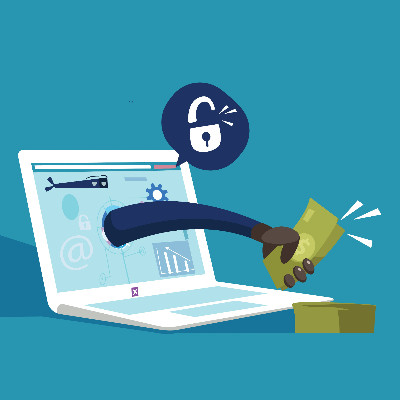
Imagine if, today, your business’ billing department received a message from one of your primary vendors. Its branding is flawless and the one is both professional and polished. It states that your vendor has changed banks, and they are requesting that your upcoming invoice should be wired to a new routing number. Would your accountant know better than to accept this email at face value, or would they be suspicious of this type of message?

How often do you find yourself sitting in your car, coffee in the cupholder, dreading going into your own business just because you know that there will be some number of IT challenges and issues that you will have to deal with?
This is completely understandable… unless you happen to be working with a managed service provider.
{source}<script id="smileback-csat-widget" type="text/javascript"> var csatSettings = {snippetVersion: "v1.1",primaryColor: "#ff9900",secondaryColor: "#7a7a7a",headerBackgroundColor: "#003851",headerTextColor: "#ffffff",type: "bordered-box",app: "686613b57d20414f80c097b5404250b5"};(function(d, s, sid) {var js, ip = d.getElementsByTagName(s)[0];if (d.getElementById(sid)) return;js = d.createElement(s);js.id = sid;js.src = "https://d2ybfz51gt58l0.cloudfront.net/csat/cdn/widget/script/v2/widget.js";ip.parentNode.insertBefore(js, ip);}(document, "script", "smileback-csat-widget-loader"));
</script>{/source}
Learn more about what L7 Solutions can do for your business.
L7 Solutions
7890 Peters Road Building G102,
Plantation, Florida 33324